
The Story
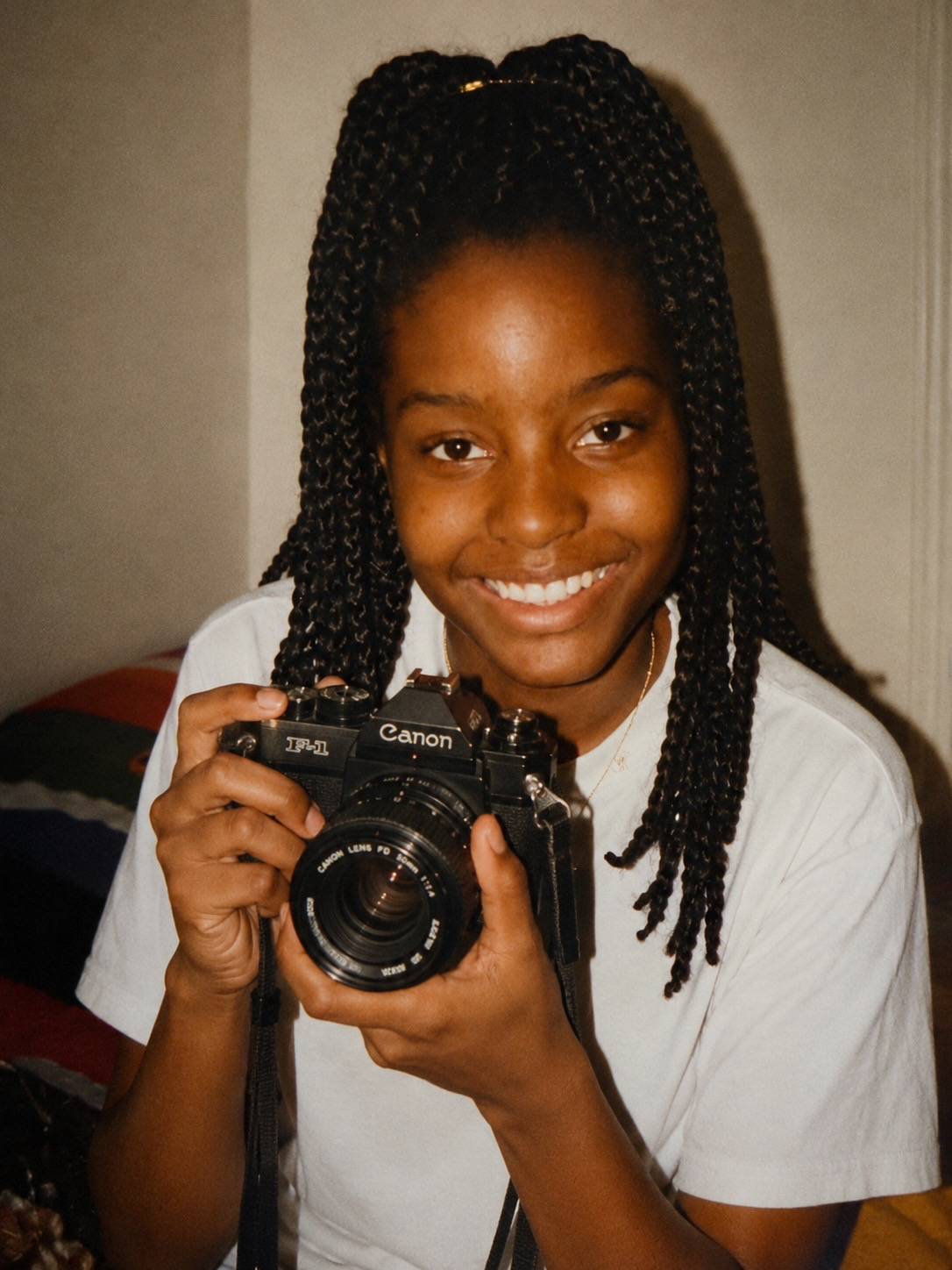
I didn't start in medicine. I started with a camera.
Before I ever held a stethoscope, I held a lens. My early years studying photojournalism and communications shaped how I see the world. They taught me that the decision of what to photograph—whose face, whose grief, whose body, whose joy—is itself a political act.
That instinct never left me. I just found a different instrument.

| THE BEGINNING
Midwifery chose me before I chose it.
That instinct led me to public health and then to medical anthropology in Memphis, where I documented the experiences of Black women in Memphis who had lost infants. I was in their homes, with their families. I was listening. I bore witness to it. And I knew, by the time that project ended, that witnessing was no longer enough.
I went back to school. I became a nurse. Then I returned for my Doctor of Nursing Practice and trained as a family nurse practitioner. After that, I completed a post-master’s certificate in nurse-midwifery. Each credential was a deliberate accumulation — not for the letters, but for the reach. I knew the problems I wanted to solve were not simple, and I was not willing to be underprepared for them.

| COMMUNITY
Memphis is not an accident. It’s the point.
The city sits at the intersection of everything this country has refused to resolve: race, poverty, geography, reproductive rights, maternal health, and what happens when a city is told its people don't deserve better.
But as Andre Benjamin famously evoked: the south got something to say.

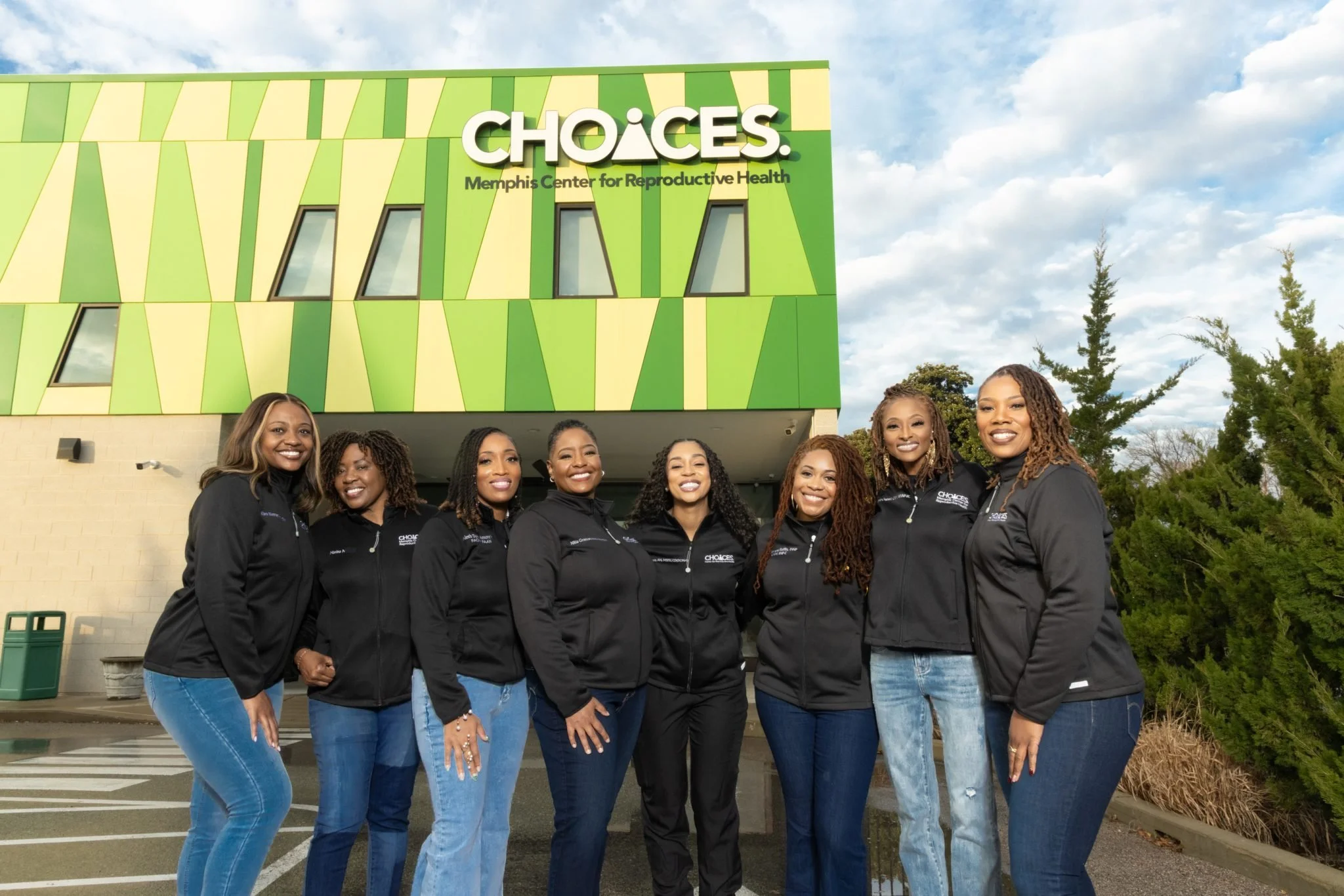
CHOICES Center for Reproductive Health
Chief Clinical Officer
The access to comprehensive reproductive care has been systematically dismantled. The midwifery workforce — particularly Black midwives — is near invisible.
CHOICES is where I put all of it together.
| WHAT I BELIEVE
| WHAT I BELIEVE
-
Reproductive health is a lens.
It reveals who gets care, who is trusted. and who gets to make decisions about their own lives.
-
Midwifery is a justice practice.
It centers relationship, redistributes power, the knowledge that people carry about their own bodies and lives.
-
Storytelling is evidence.
Evidence without story reaches the head. Story with evidence reaches somewhere deeper. A single story can make visible what data alone cannot.
-
Black women should be architects.
Black women deserve to be at the center of the institutions, policies, and movements that claim to serve them. Not afterthoughts. Not demographics.
| TODAY
They are not separate tracks. They are one practice.
-
As Chief Clinical Officer of CHOICES Center for Reproductive Health, I have helped build a comprehensive reproductive health center and the first birth center in the city of Memphis. We are midwifery-led and reproductive justice-centered. We serve predominantly Medicaid populations. We do not ask people to earn their right to excellent care. We start from the premise that they already deserve it.
-
As Clinical Associate Professor at the University of California, San Francisco School of Nursing, where I train the next generation of advanced practice clinicians and midwives.
-
As Chief Clinical Officer of CHOICES Center for Reproductive Health, I help lead a Black-led, full-spectrum reproductive health organization grounded in midwifery and reproductive justice. My leadership has included developing clinical systems, expanding community birth, building pathways for Black nurse-midwives, and creating programs that move equity from principle to practice.
In academic spaces, I lead and develop nurse-midwifery education, curriculum, mentorship, and fellowship initiatives focused on preparing clinicians to care for communities with rigor, humility, and an understanding of power.
I have also served on the Board of Directors of the American College of Nurse-Midwives and SisterReach and continue to work across clinical care, education, advocacy, and scholarship to expand what is possible for midwives and the communities we serve.
-
I have spoken at the TED stage, at national conferences, at policy convenings, in academic journals, and in rooms where decisions get made that affect the lives of Black women who will never know those decisions were being discussed.

| LET’S WORK TOGETHER