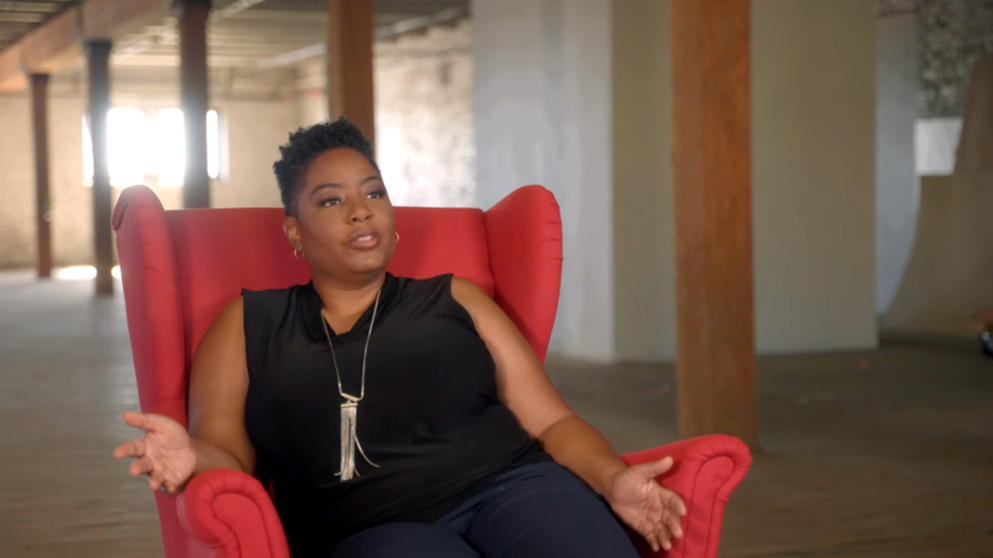
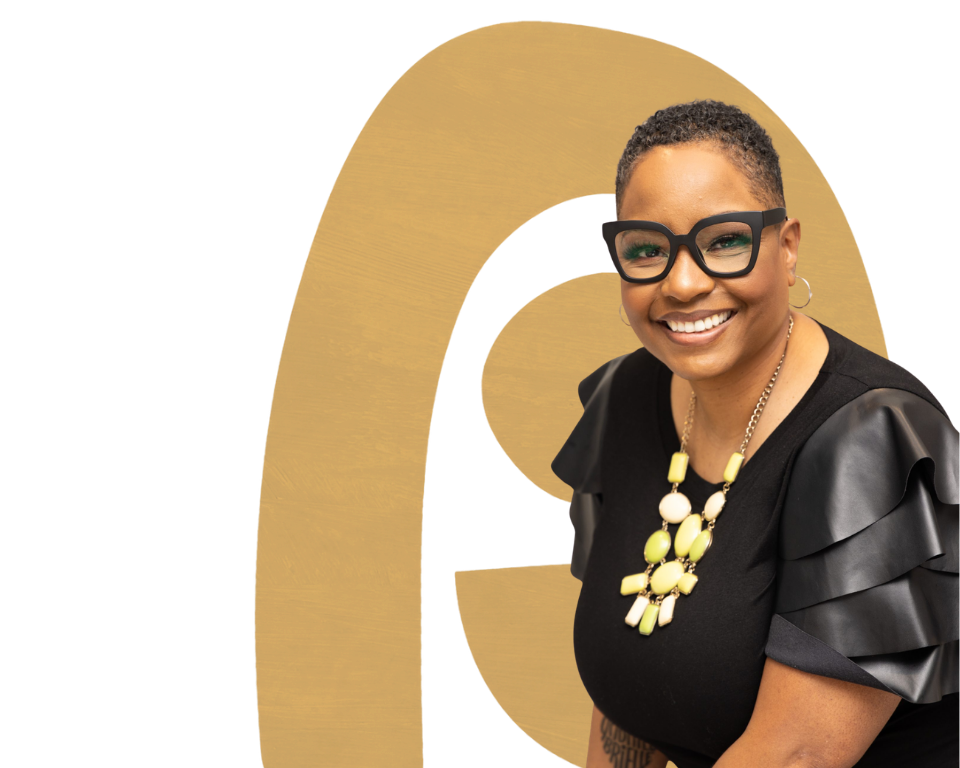
MY STORY
I didn’t start in medicine.
I started with a camera.
My early years studying photojournalism and communications shaped how I see the world. They taught me that the decision of what to photograph—whose face, whose grief, whose body, whose joy—is itself a political act.
That instinct never left me. I just found a different instrument.

― Dr. Nikia Grayson
THE SOUTH GOT SOMETHING TO SAY
Memphis is not an accident. It’s the point.
I have lived in Memphis since 2003. I know this city. I know what it holds and what it has been denied and what its people have built in the gaps. Memphis sits at the intersection of everything this country has refused to resolve: race, poverty, geography, reproductive rights, maternal health, and what happens when a city is told its people don't deserve better.
The maternal health outcomes here are devastating. The access to comprehensive reproductive care has been systematically dismantled. The midwifery workforce — particularly Black midwives — is near invisible.
WHAT I BELIEVE
-
Midwifery is a Justice Practice
It centers relationship, informed consent, physiologic birth, and community. It is structurally subversive and insists that patients are not passive recipients. It redistributes power. It takes seriously the knowledge that people bring about their own bodies and lives.
-

Storytelling is Evidence
Evidence without story reaches the head. Story with evidence reaches somewhere deeper. A single image, a single story, a single specific moment can do what data cannot always do—it can make someone feel the weight of what is at stake.
-

Black Women Belong at the Center
Black women deserve to be at the center of the institutions, policies, and movements that claim to serve them—fundamentally, without apology.
Not as an afterthought. Not as a demographic. As architects.
-

Reproductive Health a Lens
If you want to understand how power operates — who gets care and who doesn't, who is trusted with their own body and who isn't, who gets to make decisions about their own family and who gets those decisions made for them — reproductive health will show you.
-

The Revolution Will be Midwifed
That is not a metaphor. Or — it is a metaphor, and also a program, and also a conviction.
We are in the middle of it. And I intend to be there when it lands.
THE LIFE CHOSE ME
My journey was never meant to be linear because life is not linear.
-
I studied photojournalism and communications at Howard University, and then stayed at Howard for my Master of Public Health. Those years shaped me in ways I am still unpacking. I learned that the most important work is often the work of making visible what institutions have decided to ignore.
This is true for everything: keynotes, manuscripts, classroom, podcast conversations, clinical encounters. If the work does not move people, it is not reaching them.
-
Description text goes here
-
After moving to Memphis in 2003, I enrolled in a Master's program in Medical Anthropology at the University of Memphis — drawn to the discipline because it holds both the structural and the intimate, both the systems and the people living inside them. It was there, at the end of that program, that everything changed.
For my research, I was documenting the experiences of Black women in Memphis who had lost infants. I was in their homes, with their families. I was listening. What I heard broke something open in me — and rebuilt it into something I have been working from ever since.
-
In 2011, I went back to school.
I became a nurse. Then a nurse-midwife. Then a nurse practitioner. Then a doctor of nursing practice. Each credential was a deliberate accumulation — not for the letters, but for the reach. Because I knew the problems I wanted to solve were not simple, and I was not willing to be underprepared for them. I completed my post-master's certificate in midwifery at Frontier Nursing University, and I have been practicing midwifery in Memphis ever since.
-
I am a Clinical Associate Professor at the University of California, San Francisco School of Nursing, where I train the next generation of advanced practice clinicians and midwives. I have served on the Board of Directors for the American College of Nurse-Midwives. I have spoken at the TED stage, at national conferences, at policy convenings, in academic journals, and in rooms where decisions get made that affect the lives of Black women who will never know those decisions were being discussed.
-
As Chief Clinical Officer of CHOICES Center for Reproductive Health, I have helped build a comprehensive reproductive health center and the first birth center in the city of Memphis. We are midwifery-led and reproductive justice-centered. We serve predominantly Medicaid populations. We do not ask people to earn their right to excellent care. We start from the premise that they already deserve it.
Our team is small. Our impact is not. We have fought for our patients to have midwifery care in a city that has locked midwives out. We have fought for our patients to be seen and heard in a system that has spent generations ignoring them. We have fought for the radical idea that excellence and equity are not in tension — they are the same thing. We have built workforce pipelines. We have developed clinical training programs. We have sat in legislative hearings and policy rooms and faculty meetings and said, over and over, that this work is urgent and that we are not leaving until it is taken seriously.
A MODEL OF CARE DESIGNED TO CARE
What we have built at CHOICES is not a clinic that happens to care about justice. It is a justice model that happens to deliver clinical care.